ADVERTISEMENT-BEST WISHES FROM

-Khwaish Hingad (editorial1@imaws.org)
Call randomly an employee working in an IT company and ask a ‘Plan-B’ in their career. 80% would tell “If I get sacked, tomorrow I would start a restaurant !“. There is a common perception that the most easiest business in the world is starting and running a restaurant. However, not many understand that running a restaurant involves aspects like physics, mathematics, geography, architecture and technology. Hospitality consultants read the heartbeat of a kitchen, refine the guest’s journey, and elevate simple meals into soulful moments. With balanced artistry and strategy, they guide restaurateurs toward spaces where hospitality feels effortless and every plate tells a story worth savoring every day.
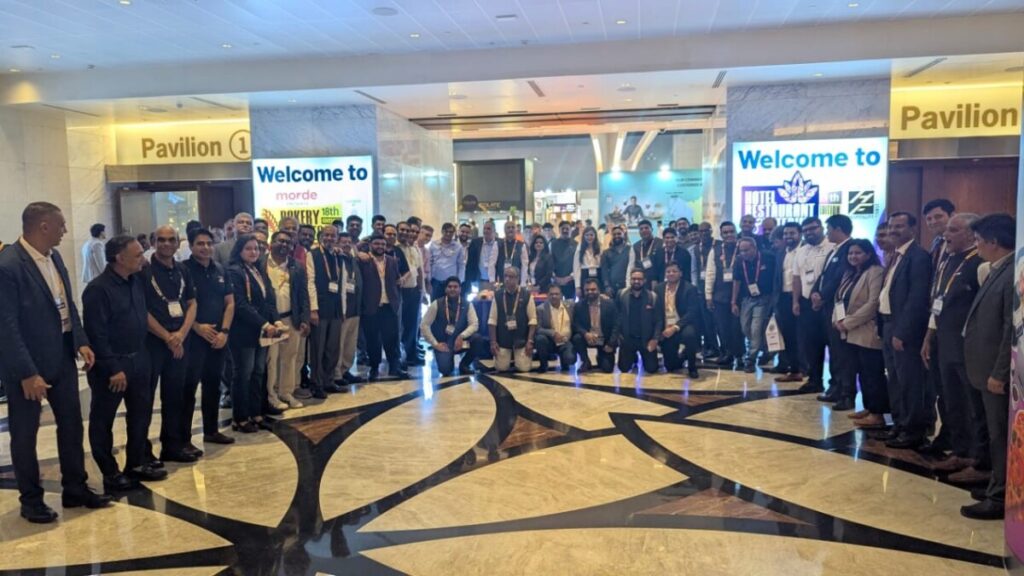
India’s leading Doyens had came together to uphold professionalism in the industry and had formed ‘Hospitality Consultants Forum’, an association to discusses the dedication required, the battle against ‘borrowed knowledge’, and bring professionalism to the the profession.
The process of launching a successful restaurant or hotel is a high-stakes endeavor that requires far more than passion and a prime location. These specialists are the architects of profitability, ensuring that every decision from kitchen layout to menu pricing contributes to a viable, long-term business model. They blend domain expertise, market analysis, and financial acumen into a coherent plan, turning a simple concept into a sustainable venture.
The Forum’s Foundation: Professionalizing an Understaffed Industry
India’s vast and booming food service sector relies on a surprisingly thin layer of dedicated expertise. This stark reality is the driving force behind the recently established Hospitality Consultants Forum.
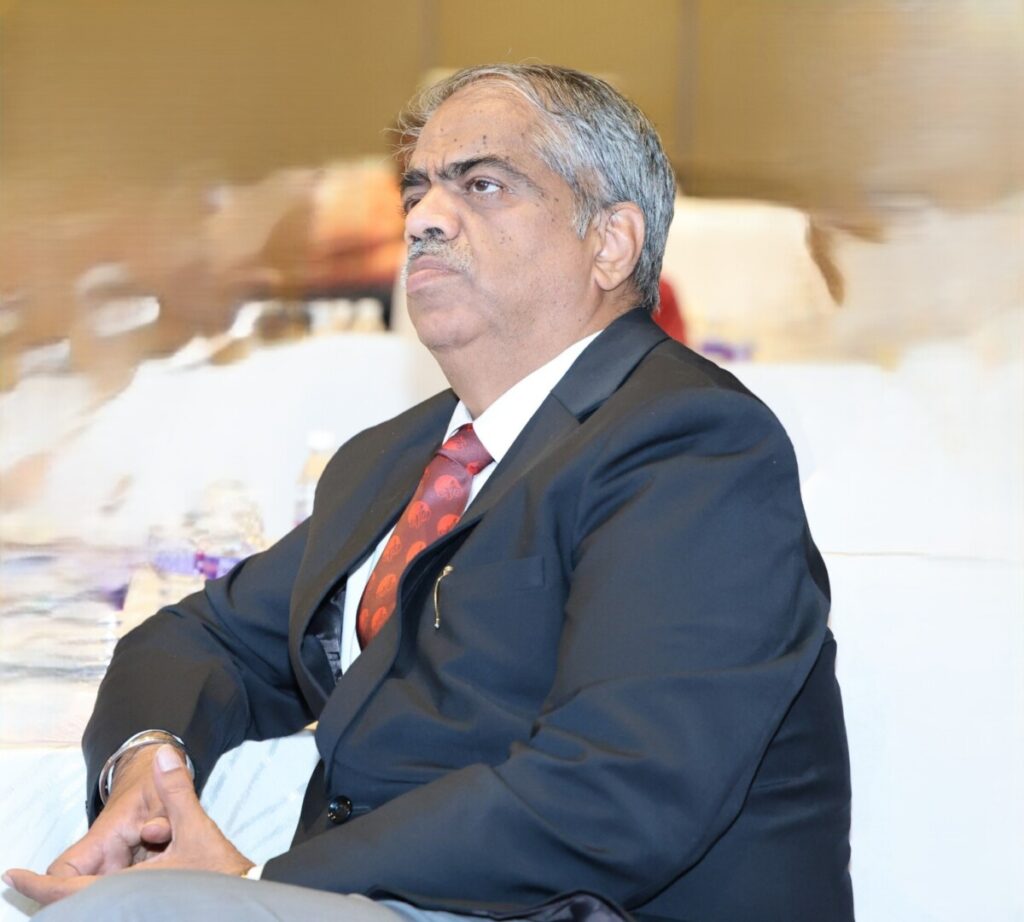
“The sum total of full-time hospitality consultants in this country, I am talking about 140 crore population country, the sum total of full-time hospitality consultants is not even a 100. This astonishing statistic underscores the association’s urgent mission: to professionalize a field where too many operate on ‘borrowed knowledge’ or claim expertise without the necessary years of dedicated service.”, says Mr. P. Sravan Kumar, the President of the association. Mr. Kumar asserts, is a full-time profession that demands nothing less than years and years of dedicated service and continuous learning.
Role, Practice, and Plans for Transformation
The Hospitality Consultants Forum, which is registered under the Karnataka Societies Act with its headquarters in Bangalore, is not focused on rapid, uncontrolled membership growth. Its objective is singular and focused: “work towards enhancing the overall standards of food service industry in India.”
This grand objective is pursued through a multipronged approach focusing on awareness, education, and standard setting.
1. Driving a Cultural Shift in Compliance
A primary focus area for the Forum is bridging the widespread information gap among restaurant owners regarding city-specific laws, rules, and compliance standards. To tackle this, the Forum has launched a major national initiative in partnership with kitchen equipment leaders like Elan Pro.
“We are doing a national initiative, a seminar series in 12 cities across the length and breadth of the country in the next one year, starting in Bangalore, to bring about a cultural transformation from enforced compliance to voluntary compliance.” This initiative aims to move the industry beyond merely adhering to standards out of fear of penalty, encouraging owners to embrace compliance for safety, efficiency, and sustainability. The workshops cover critical topics such as food safety, fire safety, water management, and FSSAI guidelines.
2. The Consultant’s Clinic: Mentoring the Next Generation
To engage with new and aspiring entrepreneurs and to challenge the notion that expert advice is inaccessible, the Forum is establishing the ‘Consultant’s Clinic’ or ‘Lounge.’ At major trade expos and exhibitions, the association offers free advice to startups and young entrepreneurs. This proactive approach aims to sensitize these individuals to the idea that expert consultation is available to them, acting as an early intervention tool against common startup pitfalls.
3. Guidance at the Source: Equipment Standards
The Forum extends its advisory role beyond the restaurant floor, reaching back into the supply chain. The association conducts factory visits to manufacturers of kitchen equipment and appliances. “We advise them on how to improve the product standards, how to optimize the manufacturing procedure, to see that they are able to achieve a better output.” By engaging directly with manufacturers, the Forum ensures that the very tools and infrastructure underpinning the food service industry meet higher benchmarks for quality, energy efficiency, and operational excellence.

Industry Perspective: The Battle Against Flawed Arithmetic
The expertise of a full-time consultant is most needed when an enthusiastic promoter attempts to solve the complex challenges of the hospitality sector using simple math.
The Economics of Rising Costs
The environment for launching a restaurant is increasingly challenging, with capital expenditure (capex) and operating expenditure (opex) constantly inflating. It is here that the consultant’s value becomes undeniable.
“A consultant will need to be alert to see that what are the parameters of the cost and price increasing. Accordingly, do a viability calculation and convey that to the promoter saying that even at the increased project cost, the project is still viable because of the potential of earning higher revenues or what we call APC (Average per cover).”
The consultant’s role is to ensure that menu pricing or the Average Per Cover (APC) is set high enough to ensure profitability, yet remains competitive and relevant to the locality. The difference in land costs between a Tier 1 metropolitan city and a Tier 3 city directly influences the required APC, making localized, expert viability studies essential.
The Myth of Simple Success
Mr. Kumar highlights the most common mistake made by new entrants: The belief that success is simple arithmetic. “The most common misconception for those who start a restaurant is that right location and ambience alone is the reason for the success of any restaurant. Unfortunately, that is not the case. The arithmetics are different when the role of a consultant begins.”
The “missing elements” are the integrated formula for success, which includes domain expertise on profitability, workflow efficiency, and legal compliance parameters rarely taught in hotel management schools, let alone understood by first-time business owners.
Dal Makahni in the age of AI and Instagram:
In a world increasingly dominated by digital trends, the consultant must differentiate between fleeting fads and enduring values. Mr. Kumar dismisses the idea that the trend of ‘Instagrammable’ food will permanently displace the fundamental appeal of cuisine. “In my opinion, it is a passing trend and the core value of the food, which is the taste, will never go out of fashion.”
While the trend has made restaurant owners more conscious of presentation and service, the consultant’s job remains rooted in quality. “On needs to understand that Dal Makhani will never go out of fashion in this country,” he affirms, underscoring that traditional, well-executed food will always win in the long run.
Similarly, the rise of Artificial Intelligence (AI) is viewed not as a threat, but as an enabling tool. AI may empower clients to ask better, more informed questions, but it can never replace the human consultant who provides domain expertise, experience-based intuition, and ultimately, accountability.
The Challenge of the Quack Consultant
The greatest obstacle confronting established, full-time consultants is the degradation of professional standards caused by the prevalence of unqualified practitioners. This issue is particularly acute in emerging markets, where equipment vendors frequently assume an advisory role. These vendors, leveraging “borrowed knowledge,” often provide biased recommendations tied to their sales, which is a common catalyst for operational inefficiencies and the high rate of initial business failure.
Mr. Kumar is clear on the most critical threat to the industry’s integrity: “I don’t look at them as major challenges. Major challenges are the quacks doubling up as doctors.” While the battle against unqualified advice is the priority, the profession also navigates challenges related to financial adherence and the perceived value of its expertise. Mr. Kumar notes a common, though slowly improving, situation regarding payment structure: “Generally, a client feels he can evade the last one or two installments of a consultancy. But it is slowly changing. The challenges are there but we will overcome them.”
He stresses that the long-term solution lies not just in contract enforcement, but in raising industry-wide awareness so that serious promoters recognize the critical difference between unbiased, professional guidance and costly, self-proclaimed expertise.

A Multiplier Effect for Change
The formation of the Hospitality Consultants Forum marks a turning point for the industry. By acknowledging the challenges of a small, misunderstood profession, the association is applying a concerted effort to solve what was previously only addressed individually.
“We have already seen, at an individual level in our profession, we have been transforming one client at a time. So now, at the association level, there will be a multiplier effect.” Through education, advocacy, and collaboration with government and industry partners, the Forum is set to raise the professionalism, standards, and profitability of India’s food service sector, ensuring that the critical “missing element” of expertise is accessible to all who seek genuine success.
The Future Vision: A CIBIL Score for Compliance
Looking ahead, the association plans to formalize its efforts by collaborating with government bodies such as the Food Safety and Standards Authority of India (FSSAI) or the Skill Development Council. The ultimate goal is to create a recognized curriculum and a mandatory credit rating system for restaurant businesses.
“The long-term plan is that the restaurants should be mandatorily required to acquire maybe 100 credits a year, and the workshop modules will contribute towards the credit.” This system would function much like a CIBIL score for businesses, where continuous education and adherence to best practices become non-negotiable requirements for certification and licensing, ensuring a professionalized, safe, and efficient industry for all stakeholders.
ADVERTISEMENT