-KH News Desk (editorial1@imaws.org)
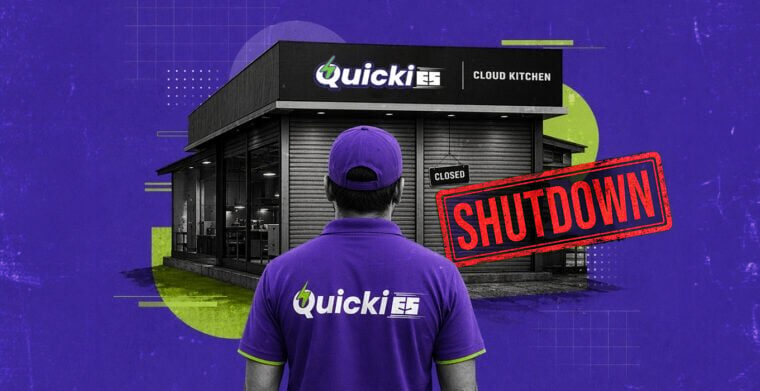
Rebel Foods, the world’s largest cloud kitchen company, has reportedly shuttered its quick food delivery vertical, ‘Quickies’. This strategic move signals an exit from the ultra-fast delivery segment—which promised food arrival within 10 to 15 minutes—as the unicorn shifts its focus back to its core, high-margin legacy brands and “Food Courts” model.
The “Quickies” vertical was initially launched to capitalize on the quick-commerce boom that has swept through the Indian market. However, industry sources suggest that the high operational costs, logistical complexities of maintaining food quality at hyper-speed, and the pressure to achieve unit profitability led to the decision to wind down the service.
Strategic Pivot and Consolidation:
-
Resource Realignment: Rebel Foods is redirecting its capital and operational focus toward its “power brands,” including Behrouz Biryani, Faasos, Ovenstory Pizza, and Mandarin Oak.
-
The “EatSure” Ecosystem: The company is doubling down on EatSure, its integrated platform that allows customers to order from multiple brands in a single order, a model that has shown higher average order values and customer loyalty.
-
Profitability Push: Ahead of potential IPO plans, the group is prioritizing sustainable growth over high-burn verticals. Closing “Quickies” allows the company to optimize its kitchen staff and delivery fleet for its standard 30-40 minute delivery windows.
-
Offline Expansion: Rebel has been aggressively expanding its physical presence through food courts at airports, malls, and highways, moving away from a “delivery-only” dependency.
The Landscape of Quick Delivery: The closure of “Quickies” reflects a broader trend in the Indian startup ecosystem where “speed for the sake of speed” is being reassessed. While quick commerce (grocery) continues to thrive, hot food delivery in 10 minutes remains a significant challenge due to preparation times and the risk of delivering sub-optimal meals.
Official Stance: While Rebel Foods has not issued an extensive public statement, the move is seen as a tactical consolidation. By exiting a niche experiment, the unicorn aims to solidify its dominance in the cloud kitchen space, where it currently operates over 450 kitchens across multiple countries.