-KH News Desk (editorial1@imaws.org)
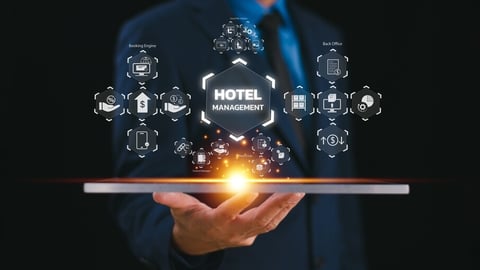
Les Roches has released its “Spark – The State of Hospitality Report 2025–2026,” identifying a structural transformation in the global hospitality market, which is now valued at over $5 trillion. The report highlights that the industry has moved beyond mere recovery into a tech-driven era where competitive advantage will be defined by three converging trends: Asset-Light Expansion, AI-Native Distribution, and Robotics.
The Three Pillars of 2026 Competitive Advantage
-
Asset-Light Expansion: Major global players are shifting from owning physical assets to scaling “lean luxury” and lifestyle brands. Strategic investments—such as IHG’s acquisition of Ruby Hotels and Marriott’s stake in citizenM—prove that brand power and operational efficiency are the new growth engines. Success in 2026 will require leaders to master capital-light economics and experiential design.
-
AI-Native Distribution: Traditional booking is being disrupted by AI agents like Google Gemini, ChatGPT, and Mindtrip. By 2026, hotels must have “AI-ready” connectivity with clean data and secure APIs to earn recommendations from these digital assistants. Cloud-native property systems and AI-enabled revenue management will become mandatory infrastructure.
-
Robotics & Automation: Robotics is transitioning from a novelty to an operational necessity to combat labor shortages. Delivery and cleaning robots (such as LG CLOi and Pudu) are being deployed at scale to improve margins. This automation allows human staff to focus on high-value emotional intelligence and personalized guest experiences.
The Human Element: Reskilling for 2026
Despite the technological surge, the report emphasizes that human talent remains the ultimate differentiator. The next generation of hospitality leaders must combine digital fluency with empathy and creativity. Reskilling is no longer optional but the foundation for delivering authentic experiences in a tech-driven world.