-Vivek Narayanan (editorial1@imaws.org)
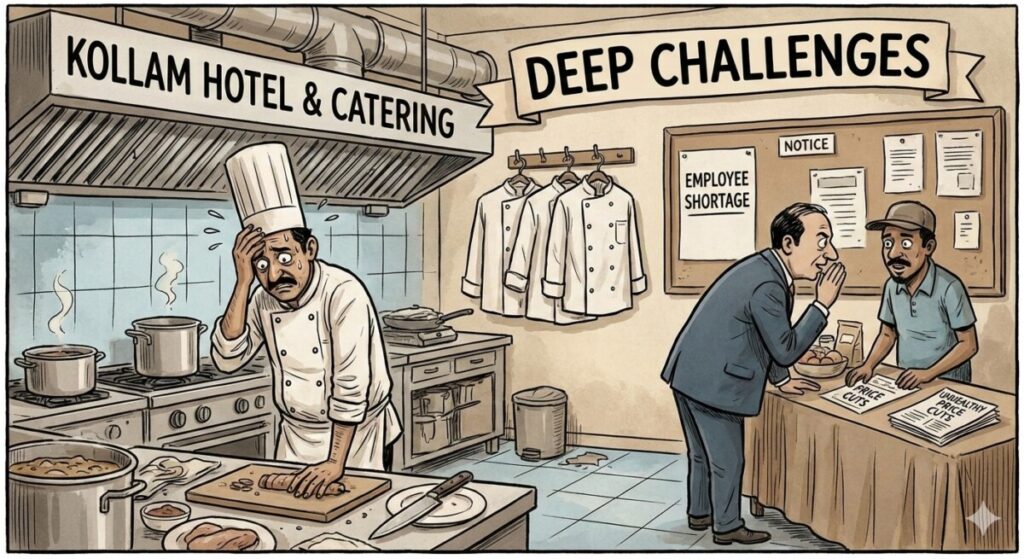
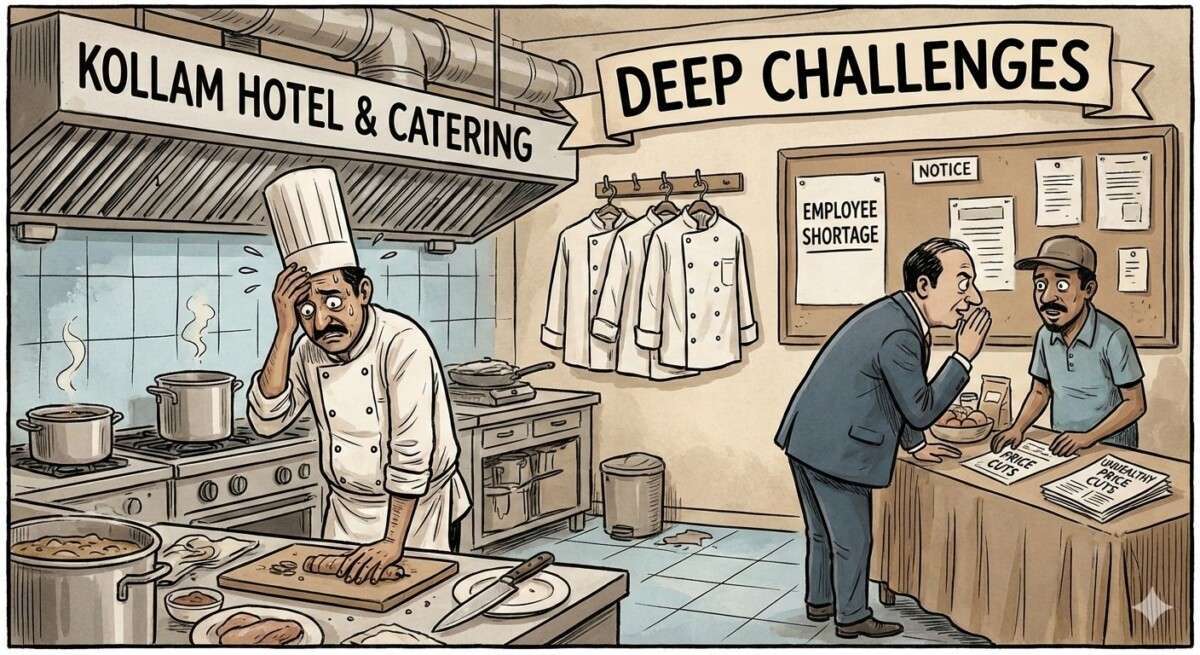
As 2026 begins, the hotel and restaurant industry in south Kerala is staring at a set of unique challenges, where many of the outlets are forced to either change their strategy or shut down, as a steep rise in the prices of essential items and a shortage of labor have hit the industry.
In the past 8 years nearly 50 restaurants in Kollam districts have closed as the rising expenses of essential items such as meat, vegetables, and commercial cylinders have risen exponentially. Hoteliers, mostly those who have been established for the past 30 to 40 years, are finding the sudden shortage of laborers, especially the migrant laborers who have returned in large numbers to their hometowns in West Bengal and Assam to complete the SIR registration procedure.

“In the past 2 months, thousands of laborers have returned back to their hometowns, as there were widespread concerns over the SIR registrations. This has led to a situation where there are very few staff in the kitchen and for cleaning and other basic purposes. Such a situation has not been experienced in recent times,” said Shajahan, President of the Kerala Hotel Restaurant Association (KHRA).
Shajahan stated that there is a high inconsistency in prices of essential items, which has led many small restaurants to the verge of closure. Interestingly, the coastal areas of Kollam are also witnessing new varieties of home-food restaurants that serve fish items coming up in large numbers. Tourists, both domestic and foreign, have been preferring these home-food restaurants, which serve multiple fish varieties.
Many major restaurants have recently changed their food menu as per the changing demands, where fish items are provided to the customers as per their choices. Kollam, which has a large presence of catering units in south Kerala, is now facing the ‘rate reduction’ issue, where many small and medium-level caterers have reduced their prices substantially while conducting events and thus causing a major challenge for the 300-plus high-level catering units, who feel that this ‘lowering’ of prices from the standardized rate is creating a major hindrance for all the units.
Reduced pricing remains a concern among catering units
Many new-age caterers have reduced their overall rates up to 25 to 30 percent, thus turning out to be a major challenge for the established units. In the past year, as per sources within the industry, 75 to 80 new catering units have registered in Kollam district. Most of them offer their services in marriages, family functions, and farewell parties. Industry insiders say that these catering units are preferred mostly due to the affordability factor.
“We run a business after paying all taxes, GST, and salaries to our employees. However, a section of new caterers has become a major challenge for us after they decide to offer catering services with very low prices. The new trend has already led to many old catering units losing business and hence facing a major drop in their revenues. The issue is already taken up in our discussion panels,” said Sreevalsan, owner of the Sree Valsam catering unit and the state treasurer of the All Kerala Catering Association, to Kitchen Herald.
Shihas, the KHRA secretary who spoke to Kitchen Herald, said that the recurrent price of essential items has been the biggest challenge the hotel industry in Kollam and elsewhere in Kerala is facing today.

“The price of fresh chicken has touched Rs 290, and the price of commercial cylinders is also high. Hotel owners are going through a challenging phase today, as many middle-range hotels are not able to sustain themselves in the long run,” said Shihas, KHRA treasurer and owner of Hotel City, Kollam District. The catering industry has witnessed steady growth in Kollam for the past 3-4 years, where catering units have been opening up in small towns and villages where tourists are attracted, especially during the monsoon season.
Another major concern that hoteliers in Kollam raise is the mushrooming of unauthorized street vendors who sell ‘Pothichor’ (the local term for homely meals in Kerala). Hoteliers say that many of these vendors openly flout the protocols issued by the government.

Binu Das, KHRA secretary and owner of Hotel Thushaara, when speaking to Kitchen Herald, said that he and his colleagues in the industry have been witnessing the trend and have been raising it with the authorities. “Street vendors with no proper registrations and licenses have been operating in places where they are not designated to. This creates a major hindrance for many of the hoteliers who have been working in the district, following all the norms and paying all taxes on time. We hope the state government and the corporation will take strict action where they will ensure that these vendors are made to operate according to the rules and regulations stipulated,” said Binu Das to Kitchen Herald.
However, a consistent rise in prices and a labor shortage have been major hindrances to the growth of the catering industry.