Chokkapan S (cbedit@imaws.org)
The Union Cabinet’s much-awaited decision to grant international status to the Madurai airport marks a watershed moment in the evolution of southern Tamil Nadu’s air connectivity infrastructure. For decades, Madurai — despite its cultural, religious and economic relevance — has operated on the fringes of India’s international aviation network, with passengers largely dependent on Chennai International Airport and Tiruchirappalli International Airport for global access.
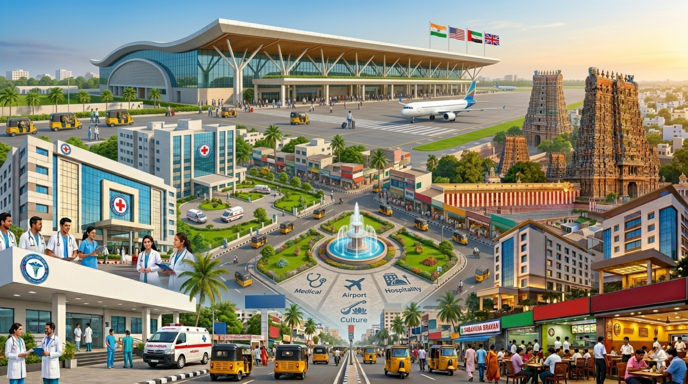
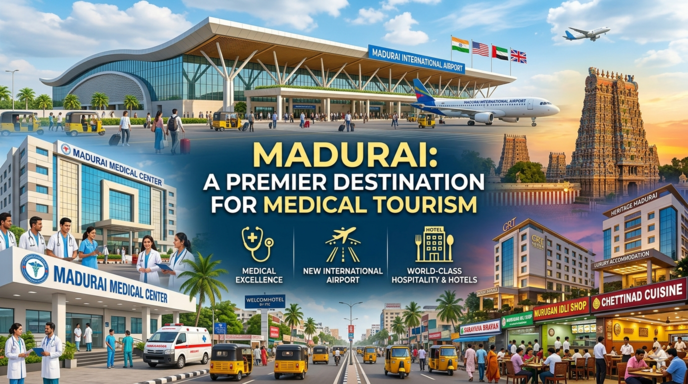
The international tag, while not an immediate switch to high-frequency overseas routes, signals an indubitable structural shift. It enables the south-central Tamil Nadu city’s airport to attract more international airlines, expand route networks and gradually position itself as a direct gateway for inbound traffic from especially South-East Asia and the Gulf — regions that already share strong cultural, economic and diaspora links with the seafaring Tamils.
Long-Awaited Upgrade with Far-Reaching Implications
From a policy standpoint, the move is being framed as a catalyst for regional economic acceleration. Local aviation authorities have expressed confidence that the upgrade will “open up more opportunities for international airlines” and enhance passenger throughput. For the hospitality sector of Madurai, this translates into a clear medium- to long-term upside: improved accessibility, reduced travel friction and a broader catchment of international travellers.
At the heart of this growth lies a compelling value proposition: affordable, high-quality healthcare vis-à-vis the other popular South Asian medical destinations. Madurai District Collector, K.J. Praveen Kumar, underscored this proposition in his public address a few months ago: “Medical tourism is flourishing in Madurai due to affordable healthcare. The city is attracting patients from other states and abroad.” This cost advantage, when benchmarked against both global markets and Indian metros, is emerging as a decisive factor in patient choice.
From a Pilgrimage Hub to Multi-Segment Destination
Historically, the ancient tripartite Sangam literature land Madurai has been synonymous with religious tourism, anchored by iconic sites, such as the Meenakshi Amman temple and a constellation of other spiritual landmarks — including Thirupparankundram Murugan temple, Azhagar Kovil, Pazhamudhircholai, Koodal Azhagar temple and Vandiyur Mariamman temple — across the region. This steady pilgrimage-driven demand has long sustained a robust base for budget and mid-scale hospitality.

The temple city, however, is now undergoing a visible transition. As M Hariharasudhan, Secretary of the Madurai District Hotel Owners’ Association, succinctly puts it: “It’s true that Madurai has been traditionally renowned for its spiritual landmarks. Interestingly, the city is gaining popularity for its robust medical infrastructure and affordable healthcare over the past few years.”
This shift is not incidental. It reflects a broader diversification of demand drivers, with Madurai gradually evolving into a multi-segment destination — one that combines spiritual tourism with healthcare, in particular, leisure and increasingly, culinary exploration, remarks Hariharasudhan, who also runs Hotel Gowri Krishna near Periyar Bus Stand.
Medical Tourism: From Emerging Trend to Established Reality
If one definitive trend has quietly gathered momentum in Madurai over the past few years, it is medical tourism. What was once a peripheral segment has now become one of the core drivers of the city’s inbound travel economy.
Patients from South-East Asia, the Middle-East, Africa, and even developed markets, such as the United States, are increasingly choosing Madurai for specialised procedures — particularly in ophthalmology and dental care. The city’s healthcare institutions, such as Apollo Speciality Hospitals, Aravind Eye Hospital, Meenakshi Mission Hospital and Research Centre, and Velammal Hospital, among others, have built a strong reputation for clinical excellence, backed by experienced practitioners and modern infrastructure.
Industry voices reinforce this ground reality. “As for the scope of medical tourism, already scores of international and other-state patients come over to several hi-tech medical facilities in the city for attending to their myriad ailments,” informs Sujei Srinivasan, proprietor of Vasan Tiffan Home at the Mahal Area of Madurai.
These international and inter-state inflows are not limited to individual patients. They often involve accompanying family members, extended stays and repeat visits for follow-up care — all of which contribute significantly towards a massive hike in local demand for accommodation and food services.

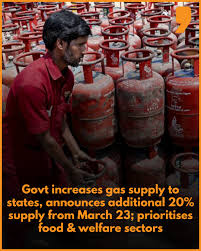
“The recent announcement of the Madurai domestic airport’s upgrade to an international one is welcome news for the entire hospitality sector in and around the city, which is currently reeling under the LPG shortage crisis for the past couple of weeks. It should augur well for our industry, comprising premium hotels to a wide range of restaurants, eateries and delectable street food joints, in the long term,” affirms Sujei.
The AIIMS Factor and Future Healthcare Demand
Adding another layer to this evolving ecosystem is the upcoming All India Institute of Medical Sciences (AIIMS) in Madurai. Once operational, AIIMS is expected to further elevate the city’s profile as a national and international healthcare destination.
“With the Union government-run AIIMS being set up currently, we anticipate even more international visitors and other state patients to pour into our city. This should certainly boost the hospitality sector in Madurai,” Sujei captures the industry’s forward-looking sentiment.
For the hospitality sector, this represents a pipeline of sustained demand, rather than a short-term spike. Medical tourism, unlike leisure travel, is less seasonal and more need-driven — offering a stable and predictable revenue stream for hotels and food service operators.
Bridging the Gap: Connectivity Meets Care
While Madurai’s healthcare ecosystem has been steadily evolving, one critical bottleneck has historically limited its full potential: connectivity.
International patients often prioritise ease of travel when choosing treatment destinations. Indirect routes, long layovers and additional transit costs can majorly impact decision-making. The international airport upgrade directly addresses this constraint.
By enabling smoother, more direct access to the city, the development effectively bridges the gap between demand and accessibility. Trade and hotel industry stakeholders have unanimously highlighted that the move will “significantly accelerate the growth of trade, industry and exports,” while also boosting tourism across segments — including medical tourism.
For the HoReCa sector, this convergence is particularly powerful. It aligns two high-potential growth drivers — aviation and healthcare — into a single, reinforcing cycle of demand creation.
Early Signals and On-Ground Sentiment
On the ground, hospitality stakeholders are already beginning to sense this shift, even as they are anticipating a near-term uptick in footfall. “I expect more visitors — including those who come for their medical treatments — to stream in right from this summer vacation,” observes M Senthilvel, Treasurer of the Madurai District Hotel Owners’ Association.
“Madurai is already witnessing a lot of foreign tourists from South Asian countries like Malaysia and Singapore, and a considerable chunk from the Middle-East nations,” confirms Senthilvel, who is also the proprietor of the popular non-vegetarian joint, Amma Mess, in the city.
These insights point to a dual trend: existing international demand is already present, and improved connectivity is likely to amplify it further.
Culinary Identity as a Complementary Strength
Alongside healthcare and connectivity, Madurai’s strong culinary identity adds a distinct advantage. The district administration has in recent times articulated a vision of positioning the city as the “food capital of Tamil Nadu,” reinforcing its appeal as a destination that offers both treatment and taste.
This dual positioning is particularly relevant for international travellers, who increasingly seek holistic experiences that combine healthcare, culture and cuisine. While the outlook remains positive, hospitality industry stakeholders are also exercising a degree of caution. R. Srinivasan, State Secretary of the Tamil Nadu Hotel Owners’ Association, avers, “While the numbers of international and other state visitors for medical tourism are not considerable yet, the conferring of international status to Madurai airport is bound to bring in more and more patients along with their caring families to this beautiful city in the near future.”
This balanced perspective underscores an important point: the transformation will be incremental, not instantaneous. Route expansion, airline participation and infrastructure readiness will determine the pace at which Madurai realises its full potential.
The Road Ahead: A Defining Opportunity for HoReCa
The international airport upgrade and the rise of medical tourism represent a convergence of structural growth drivers for Madurai. The city is no longer defined solely by its spiritual legacy; it is steadily emerging as a multi-dimensional destination with diversified demand streams.
For the hospitality and food service industry in this temple city, this marks the beginning of a new growth cycle — one characterised by evolving customer profiles, higher expectations and expanded opportunities. As these twin engines gather momentum, the focus now shifts to how effectively industry stakeholders can align, adapt and capitalise on this transformation.
What Evolving Demand Means for Madurai’s HoReCa Sector
Medical tourism typically drives:
- Longer stays, including pre- and post-treatment periods
- Higher per-room occupancy, often with attendants and family members
- Repeat visits, particularly for follow-up care
- Preference for hygienic, reliable dining options
Combined with increased international connectivity, this is expected to shift Madurai’s demand profile towards higher-value, experience-driven segments.
Hotels may need to adapt by:
- Offering extended-stay packages
- Enhancing in-room dining and specialised meal plans
- Building partnerships with hospitals and travel facilitators
Similarly, the food service sector stands to benefit from:
- Increased demand for clean, consistent and diverse dining formats
- Opportunities in health-focused and customised meal offerings
- Rising footfall across both organised and unorganised segments